Homeowners and business owners across Iowa, IA rely on Aqua Guard Water Damage because our trucks are staged regionally instead of centralized in one city, cutting the drive time on the calls that matter most.
Call +1-844-578-1604 Now
Across Iowa, IA, our technicians hold IICRC water restoration certifications and stay current on the drying standards that actually apply to the humidity and climate patterns found in this state.
Our Iowa, IA dispatch line stays staffed around the clock, so whether the call comes from a coastal community or an inland metro, someone who understands local conditions picks up.
Beyond the technical certifications, our crews are trained to communicate clearly under pressure, because a homeowner dealing with a flooded home deserves plain answers, not jargon.

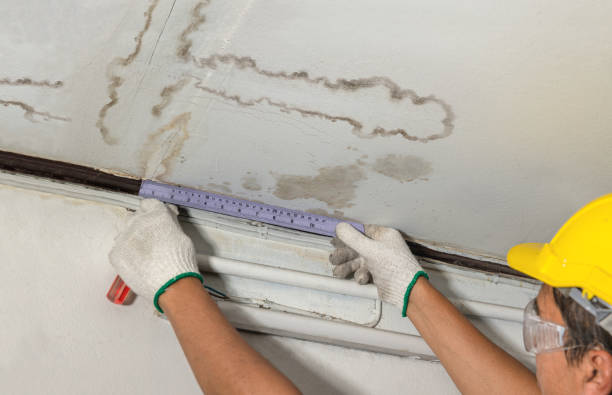
Yellow-brown rings on your ceiling or walls almost always mean water has been sitting behind the surface longer than you think, and the drywall paper backing is likely already feeding mold growth. Waiting to see if the stain spreads only gives moisture more time to travel further into the structure.
A persistent musty smell in a basement or bathroom usually means microbial growth has already started somewhere you can't see, often inside wall cavities or under flooring. Air fresheners will mask it temporarily but won't touch the actual source.
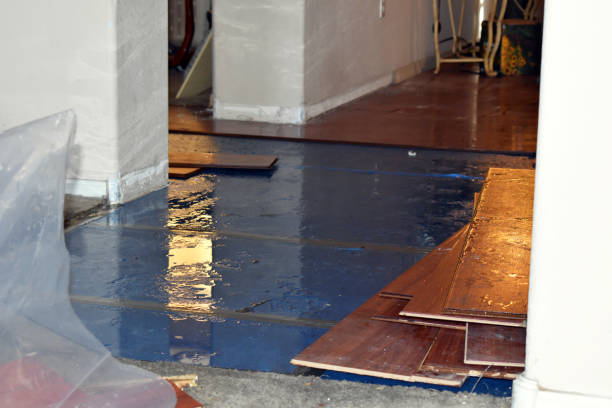
Carpet that stays damp or squishy days after you last noticed water is holding moisture against the subfloor, which is exactly the condition that lets mold take hold underneath.
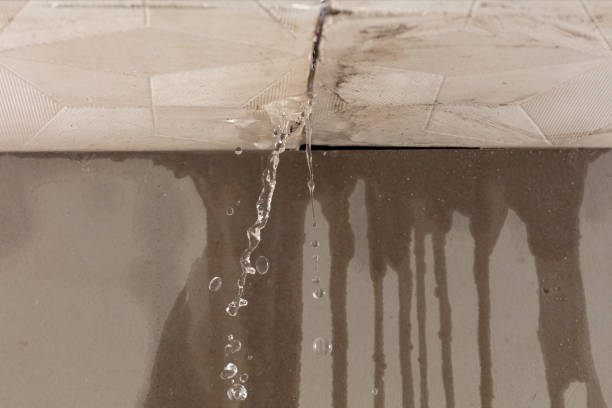
An unexplained jump in your water bill is frequently the first sign of a slab leak or a failing supply line long before any visible water appears. Catching it at this stage is far cheaper than waiting for a visible flood.
Paint that bubbles or peels away from a wall, especially near baseboards, usually means moisture is pushing through from behind rather than a simple application problem.
Mold that returns after cleaning with bleach is a sign the underlying moisture source was never addressed, since surface cleaning does nothing for saturated material behind the wall.
We treat Water Damage Repair as one continuous job rather than a series of handoffs — the crew that extracts the water is accountable for the drying results, and the drying results determine what reconstruction is actually needed.
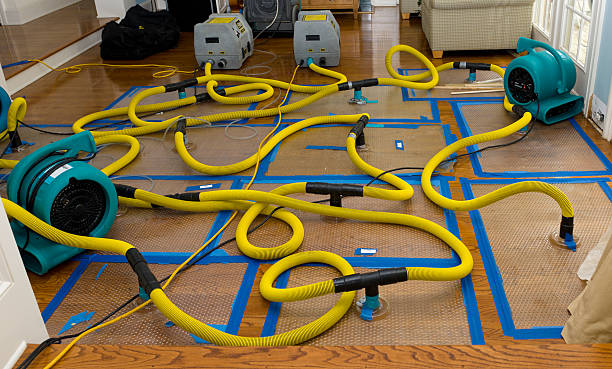
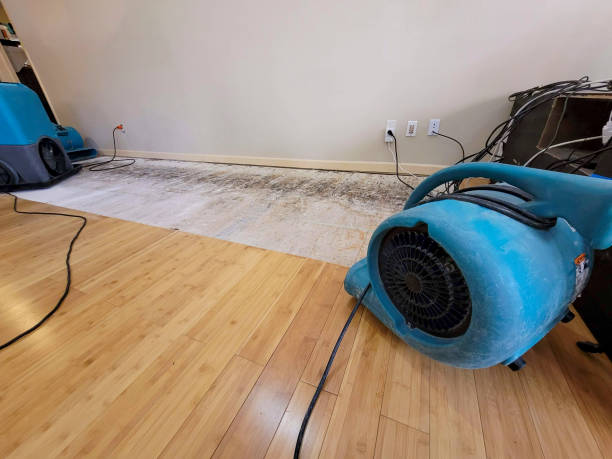
Standing water gets removed with commercial extraction equipment first, then we run moisture readings across every affected surface so the drying plan targets what's actually still wet, not what looks dry on the surface.
Equipment placement isn't guesswork; it's calculated from psychrometric readings taken at the start of the job and adjusted daily as conditions change.
Category 3 blackwater intrusions require full PPE, controlled demolition of porous materials that can't be sanitized, and hospital-grade antimicrobial treatment before reconstruction begins.
Because mold can establish in as little as 48 hours, our drying timeline is built around beating that window rather than treating mold prevention as an afterthought.
Once the structure tests dry, our reconstruction team handles drywall, insulation, flooring, and trim so you're not managing a second contractor after the restoration crew leaves.
Specialized cleaning techniques can often save upholstery, electronics, and documents that look like a total loss at first glance, which keeps out-of-pocket replacement costs down.


Dispatch asks enough to prep the right equipment before the truck even leaves, so the crew isn't guessing what they'll find on arrival.
Technicians arrive with moisture meters and thermal cameras to map exactly how far the water has traveled, including inside walls and under flooring where you can't see it.
Standing water comes out first with truck-mount equipment, then air movers and dehumidifiers go to work based on the psychrometric numbers we recorded.
Once moisture readings confirm the structure is dry, we hand you documentation and move into any needed reconstruction.
We operate under proper licensing and insurance in every market we serve, with documentation available on request.
Trucks are staged regionally so a crew can typically reach you well before a national chain's call center even finishes your intake form.
We'd rather explain the cost clearly upfront than have that conversation after the job is already underway.
If a drying target isn't met on the first pass, we extend equipment placement at no extra charge until moisture readings confirm the structure is dry.
Every job closes with documented moisture verification, because a guarantee that isn't backed by data isn't much of a guarantee.
Our technicians don't get paid faster by closing jobs early, which keeps the incentive aligned with actually finishing the drying properly.
Call +1-844-578-1604From the largest metro in Iowa, IA down to smaller surrounding communities, coverage is built around actual call volume rather than a single flagship city.
As Iowa, IA grows, so does our crew count — we add regional capacity rather than stretching one central office thinner.

"A pipe burst behind our water heater and the crew here in Iowa, IA had extraction units running within 40 minutes of my call. They walked me through the moisture readings every day until it was fully dry."
James R., Iowa, IA"What impressed me most was the daily moisture log — I could actually see the numbers improving instead of just being told to trust the process."
Denise M., Iowa, IA"Professional from the first phone call to the final walkthrough. They re-tested moisture levels before closing the job instead of just eyeballing it."
Marcus T., Iowa, IA"Every question I asked got a straight answer, even the ones about cost, which is rare after dealing with two other contractors who kept dodging the pricing conversation."
Priya S., Iowa, IA"We had a slow leak we didn't notice for weeks and the crew found moisture in places we never would have checked using thermal imaging."
Carlos V., Iowa, IA"Our commercial unit flooded overnight and they had industrial equipment running before our staff arrived for the morning shift."
Angela F., Iowa, IA"A cracked supply line under the kitchen sink went unnoticed for days and by the time we called, the subfloor was saturated. The crew pulled the damaged material and had drying equipment running within the hour."
Tyrone B., Iowa, IA"They explained the sump discharge issue causing our crawl space flooding in plain terms and fixed it as part of the same visit instead of scheduling a separate appointment."
Wendy K., Iowa, IA